How to Make a Rental Flat Quieter Without Damaging Walls: A Checklist for Tenants
Renting a flat comes with a quiet catch. The measures that would make the biggest difference to noise — thicker glazing, an extra layer of plasterboard, a proper acoustic door — are usually the ones you are not allowed to touch. Drilling into walls, swapping doors or pulling up carpets can cost you your deposit, or at least an awkward email chain with the letting agent.
The encouraging news is that a lot of noise control is reversible. Most of what follows can be peeled off, rolled up or carried out with you when you leave, and nearly all of it fits in a hatchback. Start with the cheap, ugly bits. They usually do more than the expensive, attractive ones.
First, Work Out What You Are Actually Hearing
Sound reaches you in two ways, and they need different answers. Airborne noise is conversation, televisions, music and barking dogs travelling through gaps and thin partitions. Impact noise is footsteps, slammed doors, dragging furniture and washing machines, transmitted through the building's structure itself.
Airborne noise responds well to sealing, mass and soft surfaces. Impact noise is far harder to stop from inside your own flat, because the vibration is already in the floor or wall. Knowing which one is keeping you awake stops you spending money on the wrong thing.
Then find the routes. Walk slowly around the flat while someone talks in the corridor or in the room next door, and listen at the door edges, the letterbox, the keyhole, the window frames, and anywhere a pipe passes through a wall. Nine times out of ten, the worst offender is a gap, not the wall itself.
Seal the Gaps Before You Spend Anything Else
A front door with a two-centimetre gap under it can leak more sound than the wall beside it. This is the highest-return, lowest-cost work in the whole checklist:
- Under the door: a fabric draught excluder for everyday use, or a brush or rubber seal that screws onto the door itself if your agreement allows small fittings. A rolled towel works as a temporary test — if it helps, buy the proper thing.
- Around the frame: self-adhesive foam or rubber strip pressed into the door stops, so the door closes onto it. Test the tape on a hidden patch of paint first; some adhesives lift emulsion.
- The letterbox: an internal brush flap plus a cover, especially on a communal corridor door.
- The keyhole: a cover plate costs very little and blocks a surprising whistle of sound.
- Window frames: removable sealant strip or acoustic putty pressed into the gaps between frame and wall.
- Pipes: acoustic putty around the hole where a pipe passes through a partition. Never seal anything connected to a gas supply, and do not block ventilation openings — leave those for a Gas Safe registered engineer or your landlord to advise on.
Do not seal up your only ventilation. A flat with no airflow grows condensation and mould, and that is a far worse problem than road noise. Trickle vents exist for a reason.
Windows: Heavy Fabric, Not Clever Gadgets
Windows are usually the largest weak point in a flat, and the fix is more fabric, more layers and fewer gaps. A floor-length, lined curtain — hung inside the window recess on a tension rod, so the fabric sits close to the glass — makes a noticeable difference to traffic and voices. Let it overlap the wall at both sides and reach the sill or below.
Removable secondary glazing film is the other option: clear shrink film taped to the frame and tightened with a hairdryer. It is genuinely effective against high-frequency sound and costs little, but check the tape on a small hidden area first, and budget an afternoon for a careful job. Neither curtains nor film will do much about bass from a neighbouring subwoofer, so set your expectations accordingly.
Soften the Room, and the Floor
Bare floors and empty rooms amplify everything. Rugs with a decent underlay do more than rugs alone — the underlay is the part that absorbs. Thick wool, felt or rubber underlay, or interlocking foam mats under a rug, will reduce the echo inside your own flat and cut the noise you send downwards to whoever lives below.
Then add soft surfaces wherever they will not look ridiculous: cushions, throws, an upholstered headboard, a fabric sofa, a curtain across an alcove or a wardrobe opening. A full bookshelf is a fine acoustic absorber and looks deliberate. A hanging rug or a heavy lined curtain on a wall that shares with a neighbour is a legitimate renter's trick, provided you can fix it without nails — a picture rail or a tension rod across a recess usually does the job.
Skip egg boxes. They are a fire risk, they barely work, and they look exactly like what they are.
Add Mass Against the Shared Wall
Sound struggles to move heavy things. Anything substantial placed against a party wall helps: a filled bookcase, a chest of drawers, a wardrobe, a stack of storage boxes. Keep it a few millimetres off the wall rather than pressed tight, and it will absorb rather than rattle.
If you want to go further, mass-loaded vinyl or acoustic underlay rolls out under a rug and rolls straight back up when you move. Adhesive acoustic panels are an option on smooth, sound walls, but check the weight rating of the strips you use and avoid anything textured, papered or flaking — a panel peeling off at 2am is its own kind of noise.
Speak to People, Politely, Early
Sound travels both ways, and a neighbour who knows you are trying is far more likely to turn the television down. Knock at a reasonable hour, be specific rather than accusatory, and mention what you are doing at your end. If the noise is a landlord's responsibility — a broken extractor, an unsealed communal door, a faulty washing machine — report it in writing and keep a copy. Check your tenancy agreement before attaching anything to walls or doors, and photograph the flat before and after any change.
If It Keeps Going
Persistent noise from a neighbour is a housing issue as much as an acoustic one. Your council's environmental health team deals with statutory noise nuisance, and most councils accept complaints online. Keep a simple log of dates, times and what you heard. If the situation involves harassment, threats or a dispute over your tenancy, take proper advice — Citizens Advice, a housing charity or a solicitor are the right people, not a website.
Your First Weekend, In Order
- Walk the flat and note where noise gets in.
- Seal the front door: bottom, frame, letterbox, keyhole.
- Hang heavy lined curtains in the noisiest room.
- Put a rug with underlay down on the worst floor.
- Move a bookcase against the shared wall.
- Introduce yourself to the neighbours and mention what you have done.
- Reassess after a week before buying anything else.
Do the list in that order and you will spend very little to gain a lot. Keep the packaging, keep the receipts, and everything stays reversible when the tenancy ends.
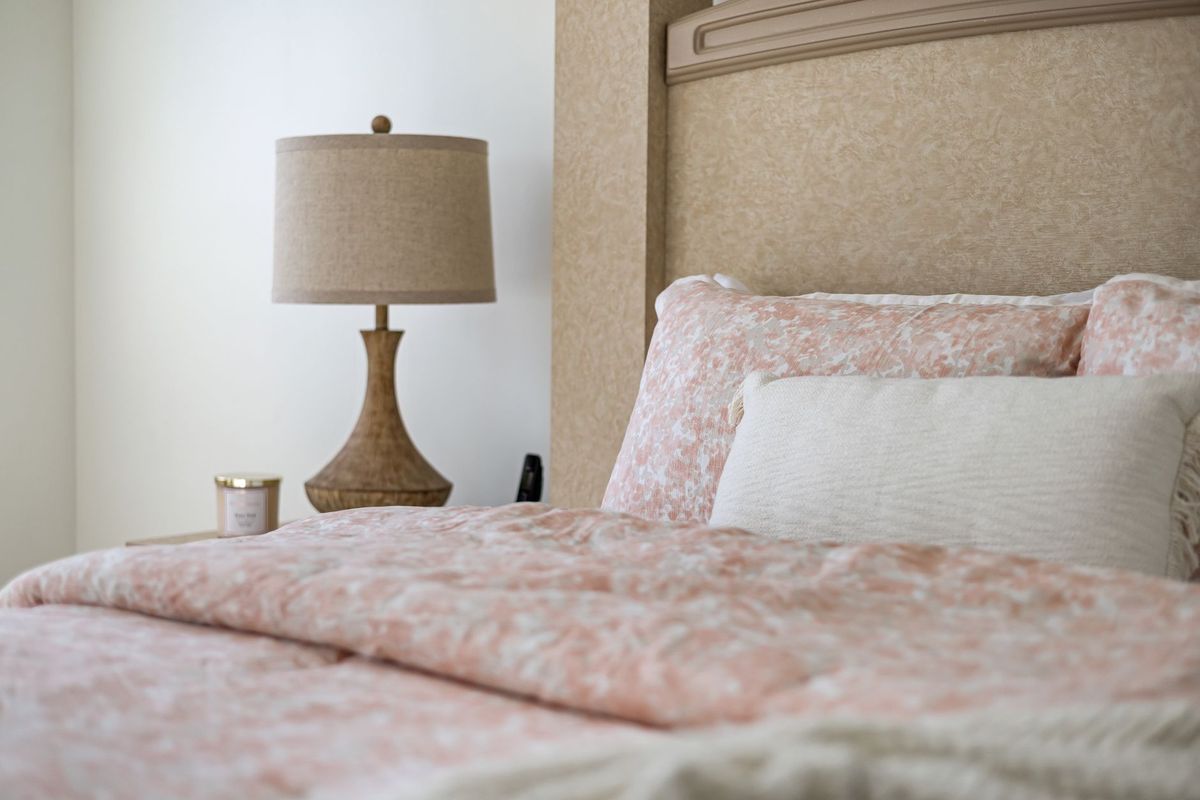
Photo: Max Vakhtbovych / Pexels